How to read the tire label properly
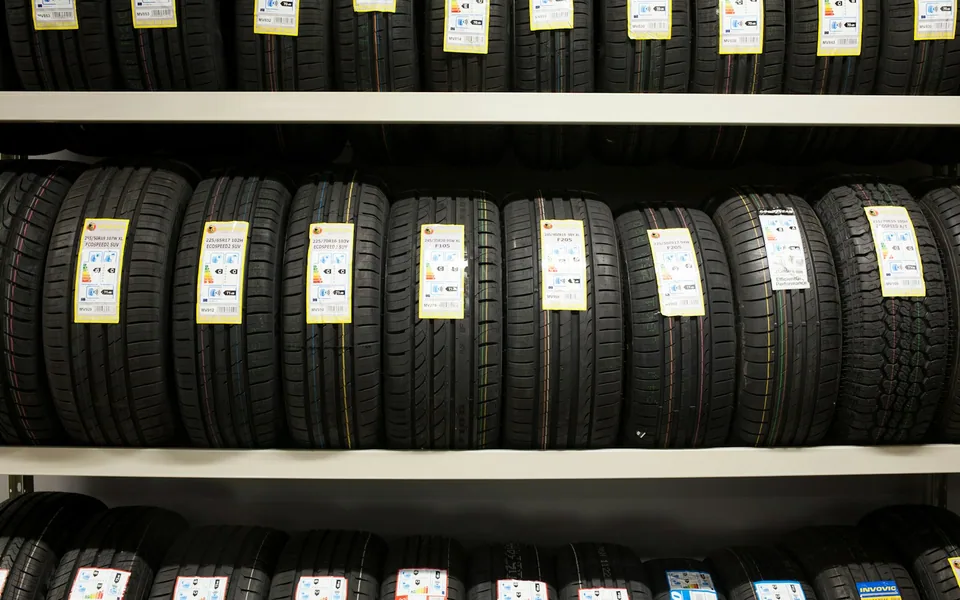
There is no rolling resistance grade on a US tire. What you get is UTQG, molded into the sidewall: a treadwear number, a traction grade of AA, A, B or C, and a temperature grade of A, B or C. The European style label with its A to G scales does not apply here, so any listing showing you one is showing you a figure from another market.
The three graded figures
Treadwear is a comparative number, not a mileage. A 600 tread is expected to last twice as long as a 300 under the same test conditions, but manufacturers grade their own tires and the numbers are not reliably comparable between brands.
Traction is graded AA, A, B or C, and it is a wet straight-line braking test on concrete and asphalt. It says nothing about cornering.
Temperature is graded A, B or C and describes the tire's ability to shed heat at speed. C is the legal minimum.
Reading it as an EV owner
UTQG gives you nothing on rolling resistance, so the figure that decides how far your car goes on a charge is simply not on the sidewall. That is the single biggest gap between what an American buyer can see and what a European one can, and it is worth knowing rather than working around.
What you can use is treadwear, carefully. It is a comparative number set by the manufacturer against its own testing, so it is meaningful within a brand and unreliable between them. A 600 from one maker is not a promise of twice the life of a 300 from another.
Weight traction hardest of the three. It is a wet straight-line braking grade, AA down to C, and it is the one that describes what happens in the moment you need it. On a heavy, instantly-torquey car that moment arrives faster than it used to.
For noise and for rolling resistance, ask the retailer whether the fitment is offered with an acoustic foam liner and look up the same pattern's European label if it has one. The tire is frequently the same product; only the labelling regime differs.
What the label does not tell you
Nothing about rolling resistance, nothing about cornering, nothing about ride comfort, nothing about how the tire behaves once it is half worn, and nothing about noise.
It is a floor, not a recommendation. Two tires with identical UTQG numbers can be very different to drive, which is why independent magazine testing still matters.
Common questions
- Is a grade A tire always better?
- No. It is better on the one measure being graded. A tire can be excellent on wet grip and mediocre everywhere else.
- Does the label change with size?
- Yes, and this matters. Grades are measured per size, so the same pattern can carry different grades in 17 inch and 19 inch. A listing quoting one set of grades for the whole range is not telling you about your size.
Where these figures come from
- GOV.UK guidance on tyre labelling rules for suppliers and distributors
- Regulation (EU) 2020/740, which applies in Northern Ireland
Last checked September 22, 2026. Where this page and your own vehicle disagree, the vehicle wins.